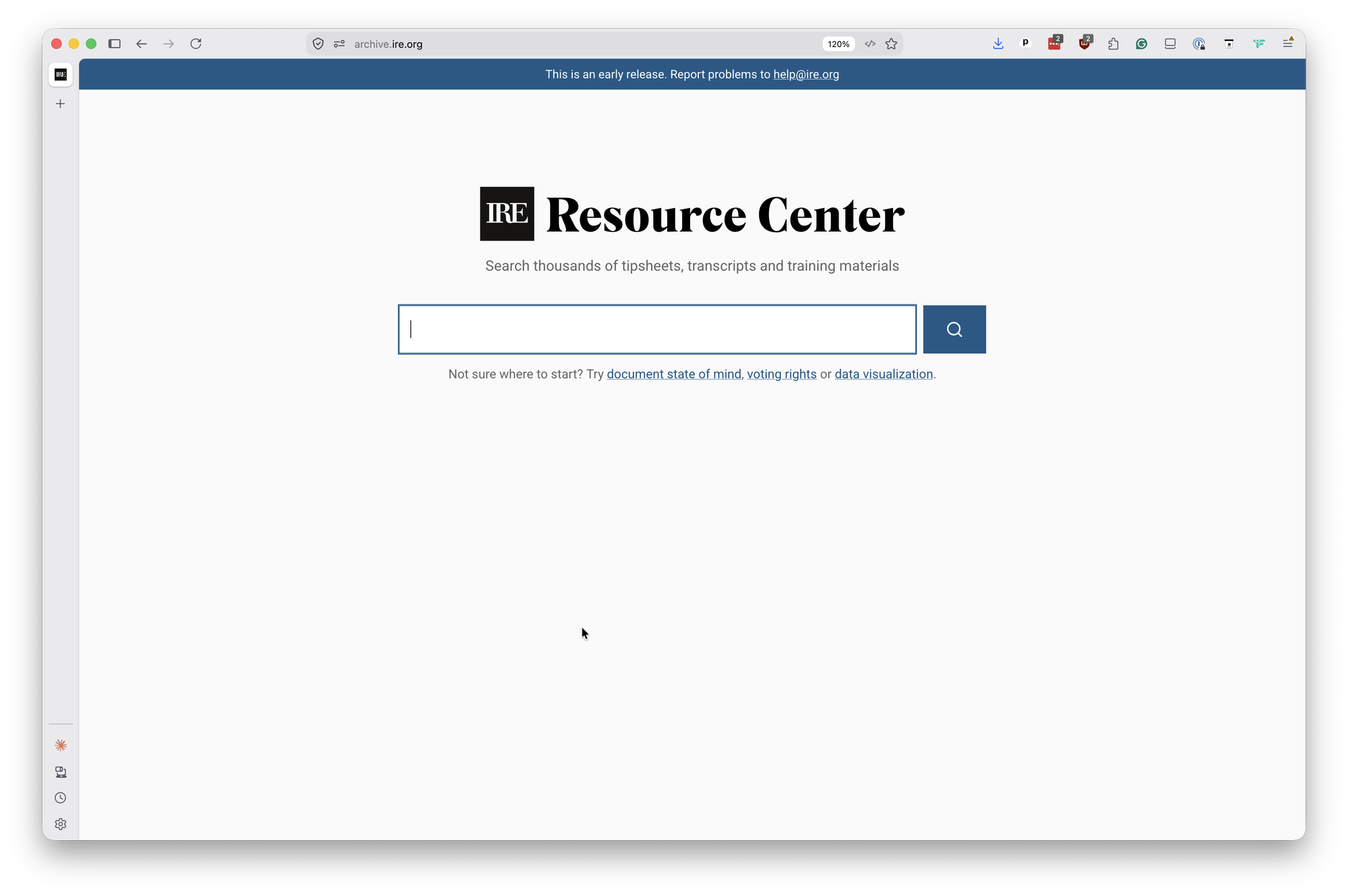
I'm pleased to announce the launch of archive.ire.org, a new AI-powered search engine unlocking the collective knowledge of Investigative Reporters and Editors members.
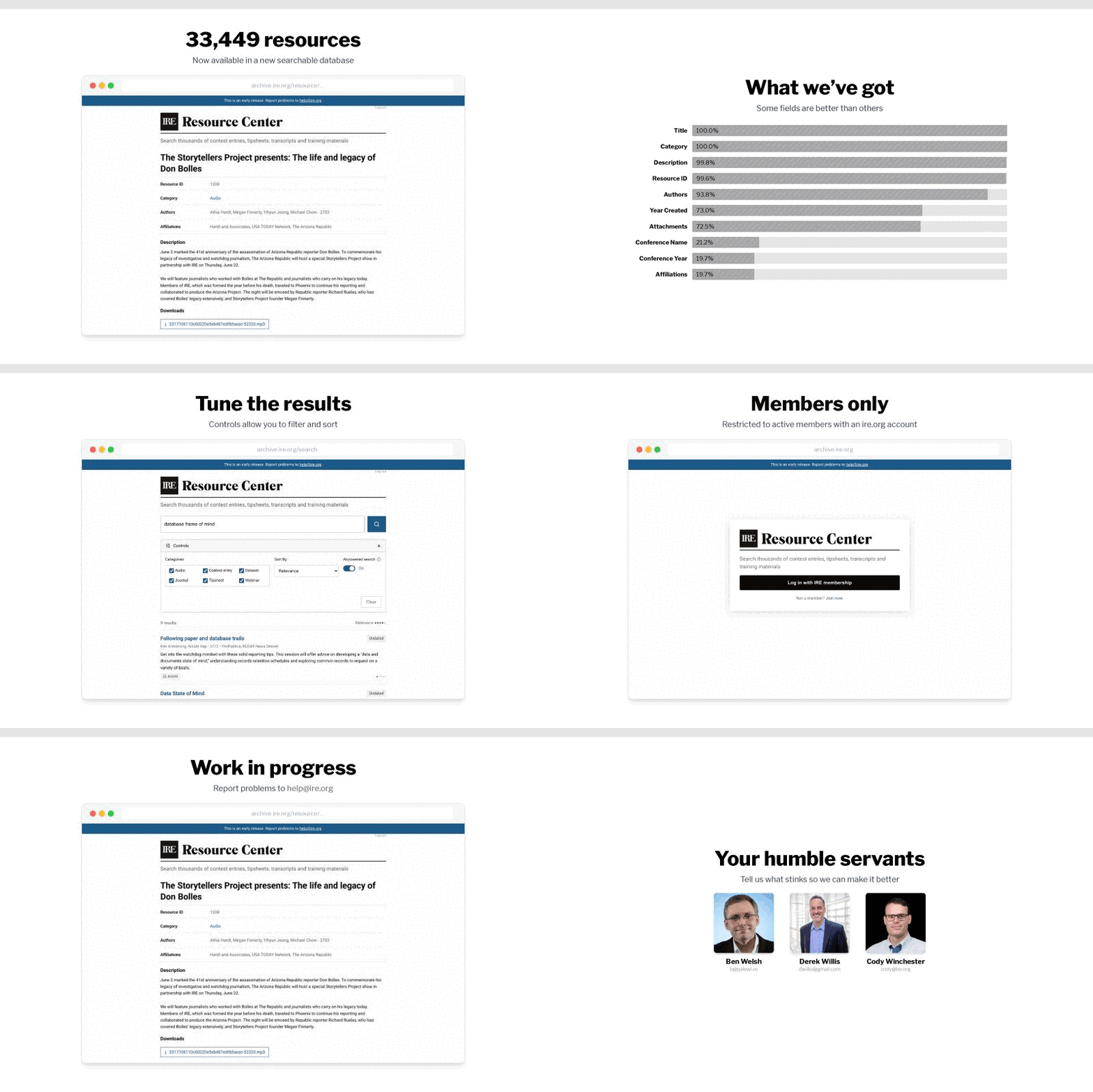
It indexes more than 33,000 resources journalists have contributed over the decades, including thousands of tip sheets, training materials, conference recordings, slide decks and contest entries.
The site, which launched today at the NICAR26 journalism conference in Indianapolis, is powered by the latest semantic search technology. That means it will use artificial intelligence to match results based on the meaning of your words, not just exact keyword hits. It will also automatically recommend entries similar to your search.
This is the result of a team effort by a committee of volunteers, with the development led by me, Derek Willis and Cody Winchester.
Access is restricted to active IRE members, authenticated through the recently relaunched ire.org. If you're not a member or let your card lapse, this is a great reason to get out your credit card.
This is an early release and a work in progress.
In the months ahead, we'll empower IRE staffers to update the database themselves. Then we'll bring more resources into the index, tidy up imperfections, and integrate AI-generated transcripts of thousands of audio recordings.
If you encounter bugs, please report them to help@ire.org.
For the nerds in the room, and I know you're out there, the backend is a Qdrant vector database harnessed by Python's FastAPI. Users tap into it via Svelte, the innovative Node.js framework invented at The Guardian UK.
If you want to talk tech, let's get the comments kicking. We haven't published the code that powers the site, but I'm eager to share the new techniques I learned putting it together.
Scott Klein and I recently wrote about journalism's declining culture of open-source sharing for Source and Nieman Lab.
For me, this project is one small effort to practice what I preached, volunteering my time to make the community's expertise more accessible.