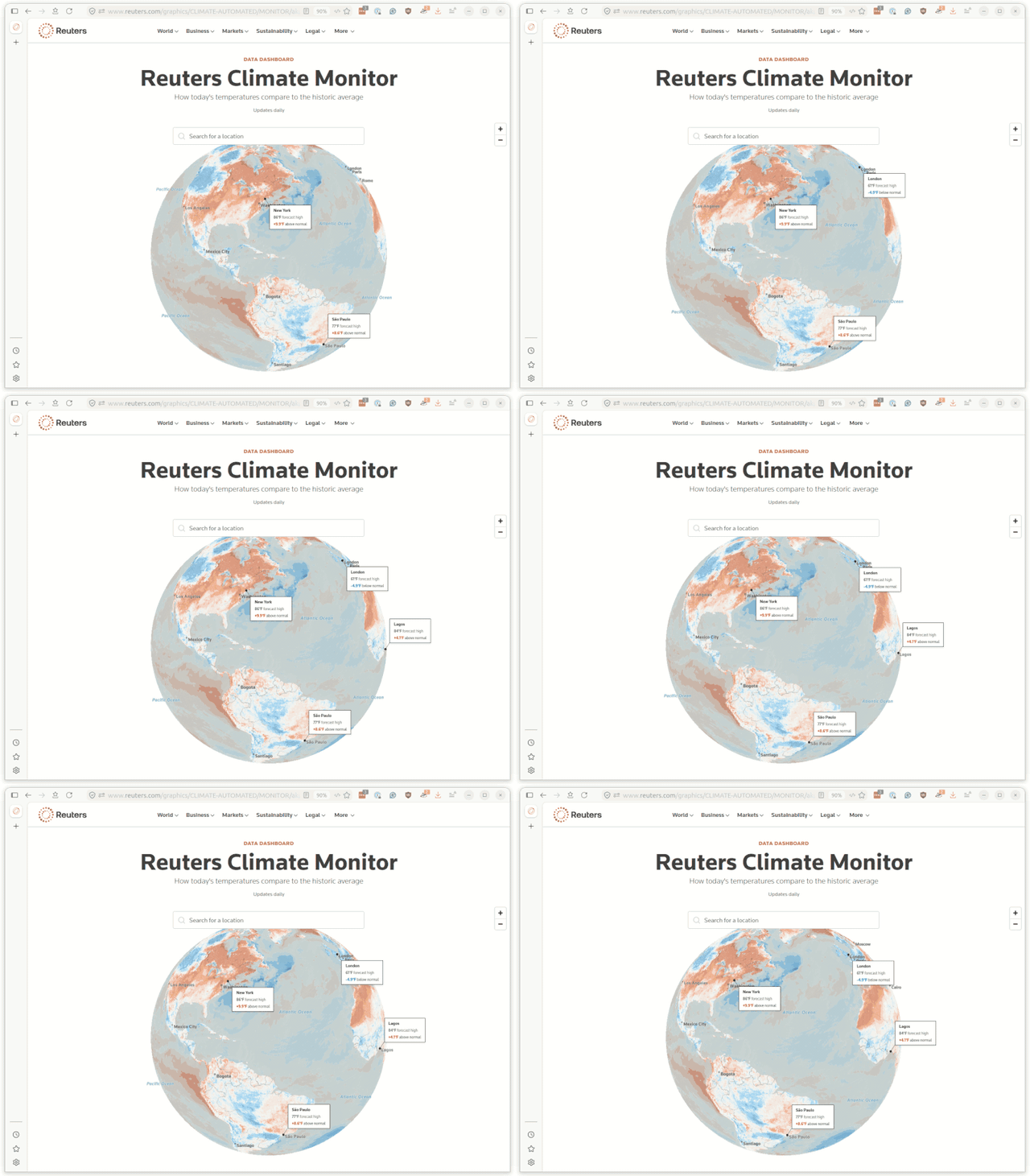
Today, I'm happy to launch the Reuters Climate Monitor, a live data dashboard that aims to track the slow-moving impact of climate change at the speed of the news.
This is the first in a series of steps that Casey Miller and I are taking to supply the scientific context that's too often missing from news coverage of extreme heat.
It all started when our executive editor, Simon Robinson, challenged my group to improve our coverage of fast-moving catastrophes.
Because most climate data is global in scope, slow to update and centered on the upward creep of arcane statistics, it often has little to add to the coverage of major news events, such as last summer's deadly European heat wave.
Our view is that more timely climate coverage requires localized data that is easy to grasp and quick to update.
After examining the challenge and consulting the world's leading climate experts, we learned that the solution didn't exist, but that an emerging set of public datasets made it possible.
So we took on the task ourselves and developed a system that automatically compares today's weather forecast against the historic record, mapping out temperature extremes before they occur.
It'll take its first turn as part of our coverage of heat at the World Cup, and then we'll be looking to apply it to this summer's heatwaves and the potential return of El Niño later this year.
My hope is that we can provide data visualizations that help people better understand a changing world, and generate "nut graf" numbers that can lead our text stories by stating clearly the dangers of extreme heat.
That's not all. We are brewing up something bigger with Maurice Tamman and company that I'm excited to publish later this year. And Casey Miller and I are on the verge of rolling additional features out of the lab, which I'll be sharing soon.
I gave a longer talk about the project at a Reuters Events summit in Boston last month. I've attached a few slides from my deck to this post.
As always, please tell me what you think, what sucks and what we ought to do next.